

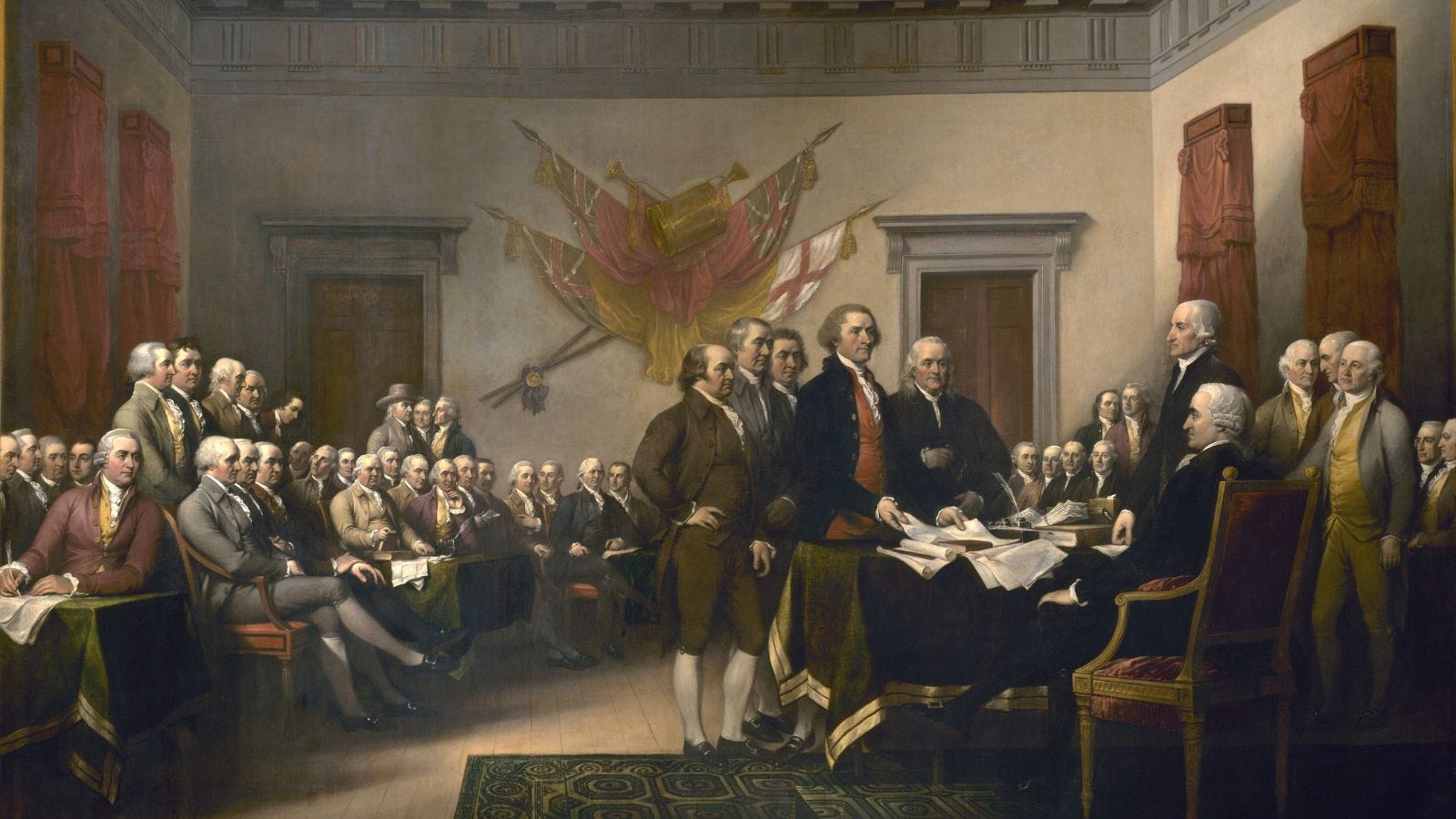
As America prepares to celebrate the 250th anniversary of the signing of the Declaration of Independence, it is worth reflecting on the faith and sacrifice of the men who signed it. Their story reminds us that this nation was founded upon Christian principles and a profound commitment to religious freedom.
Most of the 56 signers were professing Christians, and all of them understood the risks of declaring that the 13 American colonies were free from British rule. They knew that signing the Declaration could cost them everything. In fact, nine signers never lived to see the freedom for which they pledged their lives.
The Heart Behind the Pledge
A few months before the Declaration was signed, Patrick Henry addressed the Virginia Convention with words that reflected the courage and faith shared by many of America’s Founders:
“We are not weak if we make a proper use of those means which the God of nature hath placed in our power. … We shall not fight our battles alone. There is a just God who presides over the destinies of nations ... The battle, sir, is not to the strong alone; it is to the vigilant, the active, the brave.”
On July 4, 1776, John Hancock became the first delegate to sign the Declaration of Independence. As president of the Second Continental Congress, he knew that if the Revolution failed, he would almost certainly be hanged for treason. Yet his confidence rested not in earthly security but in God’s promises. In his final testament, Hancock wrote:
“Principally and first of all, I give and recommend my soul into the hands of God that gave it ... ”
The closing words of the Declaration capture the resolve of all 56 signers:
“With a firm reliance on the protection of Divine Providence, we mutually pledge to each other our Lives, our Fortunes and our sacred Honor.”
None of these words were symbolic. They were a solemn commitment made with the full understanding that the price could be death.
What Was at Stake
History reveals the depth of that sacrifice. Seventeen signers lost property to British raids, and 12 had their homes destroyed. Five lost their fortunes helping fund the Continental Army and state militias. Five were captured as traitors and suffered imprisonment and torture. One signer lost two sons to imprisonment aboard a British prison ship, another lost a son in battle, another endured the death of his wife following harsh prison treatment, and nine signers died during the Revolutionary War.
Years later, John Adams reflected on the principles that inspired America’s independence. In a letter to Thomas Jefferson dated June 28, 1813, he wrote:
“The general principles on which the fathers achieved independence were ... the general principles of Christianity.”
Freedom Is a Gift from God
The Founders understood that liberty was not merely a political ideal but a gift from God that required both courage and sacrifice to preserve.
As Liberty Counsel Founder and Chairman Mat Staver said:
“The 56 signers were deeply influenced by a Judeo-Christian worldview that gave them great courage to sacrifice everything in order to establish freedom for this great nation. However, they knew that signing America’s birth certificate could be their own death sentence. Yet they believed that it was worth their sacrifice. As we celebrate America’s 250th birthday, we must never forget the priceless cost of freedom and teach the next generation how to protect it.”
As we celebrate Independence Day and look toward America’s 250th birthday, may we remember that the freedoms we enjoy today came at a tremendous cost. Honoring that legacy means more than celebrating our nation’s birth; it means preserving the principles upon which it was founded and passing them on to the generations that follow.
Also published at lc.org.